Posts

How Butyl Thione Powers Metribuzin: Crop Applications and Global Markets
Image
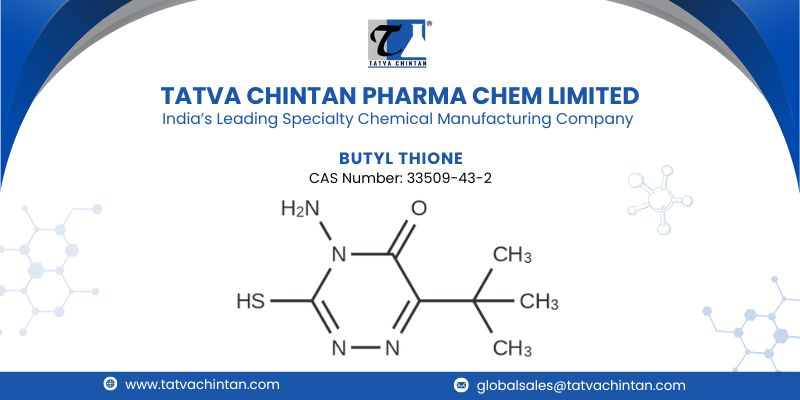
In today's agricultural industry, effective weed control is essential for maximizing crop yields and ensuring sustainable food production. Metribuzin, a widely used herbicide, plays a critical role in managing a variety of weeds across different crops. The key to Metribuzin's effectiveness is its unique chemical composition, particularly the compound Butyl Thione, produced by Tatva Chintan . This relationship between the two compounds makes Metribuzin a highly effective tool for weed control. What is Metribuzin? Metribuzin, a triazine-based herbicide, has gained widespread recognition for its effectiveness in controlling a diverse range of broadleaf weeds and annual grasses. Its versatility is evident in its application methods, as it can be applied both pre-emergence and post-emergence, either as a foliar spray or as a soil treatment. The herbicide functions by inhibiting photosystem II, a crucial component of photosynthesis. This disruption in the electron transfer process wi...

Applications Of 3-Trifluoromethyl Acetophenone in Trifloxystrobin Production

Image
Fungicides play a crucial role in ensuring plant health by controlling fungal diseases, making them indispensable in modern agriculture. Among the various fungicides available, Trifloxystrobin stands out as one of the most effective. In this article, we provide a comprehensive overview of 3-Trifluoromethyl Acetophenone, a key chemical used in the production of Trifloxystrobin, and its significance in enhancing the efficacy of this fungicide. Understanding Trifloxystrobin  Trifloxystrobin, a fungicide derived from 3-Trifluoromethyl Acetophenone, is a key agrochemical in contemporary crop protection. Its broad-spectrum efficiency against fungal pathogens positions it as a cornerstone of disease control in various agricultural settings. As a member of the strobilurin class of fungicides, Trifloxystrobin is foliar-applied. It offers protection to leaves, stems, and roots across a wide range of crops. Trifloxystrobin's versatility extends globally, with significant demand in regions suc...

How Does Tetra Ethyl Ammonium Hydroxide Function as A Structure-Directing Agent in Zeolite Synthesis?

Image
Chemical manufacturing companies produce compounds that enhance chemical processes. One such is Tetra Ethyl Ammonium Hydroxide ( Tetra Ethyl Ammonium Hydroxide), which is used in zeolite synthesis.  Tetra Ethyl Ammonium Hydroxide has a unique molecular structure that allows precise control over the creation of specific pore structures and frameworks. In this article, we discuss its function in the synthesis of zeolites. What Are Zeolites? Zeolites are crystalline materials widely used as catalysts and absorbents in industry. To construct the detailed internal structures of advanced zeolites, templates or structure-directing agents (SDAs) are essential. However, producing these SDAs with the required purity and molecular precision is a complex process. Tetra Ethyl Ammonium Hydroxide is a key SDA used in creating mesoporous molecular sieves and various zeolite structures. Its molecular configuration plays a crucial role in determining the final pore structure of the zeolite. Beyond ...

Applications Of Zeolites Synthesized Using Hexamethonium Dibromide

Image
Zeolites, crystalline materials composed primarily of aluminum and silicon, can be both naturally occurring and synthetically produced. Hexamethonium Dibromide is a compound used in the synthesis of zeolites, resulting in materials with unique structural properties and different applications. This article explores the applications of zeolites produced using Hexamethonium Dibromide as a synthesis agent. Applications Of Zeolites Synthesized Using Hexamethonium Dibromide Zeolites synthesized with Hexamethonium Dibromide as a structure-directing agent (SDA) exhibit unique properties that ensure they are used for a variety of specialized applications. The SDA’s molecular structure guides the formation of zeolites with precise pore dimensions and geometry. These formed zeolites are used in the following areas: 1. Catalysis Zeolites synthesized with Hexamethonium Dibromide as an SDA possess structural and catalytic properties. Their well-defined pore sizes, extensive surface area, and stron...

The Chemistry Behind Photoresist Strippers: How Tetra Butyl Ammonium Fluoride Trihydrate is Shaping the Electronics Industry

Image
Tetra Butyl Ammonium Fluoride Trihydrate is transforming the electronics industry through its use in photoresist strippers. These chemical strippers are critical for cleaning and etching procedures in semiconductor manufacturing and microfabrication. In this article, we discuss Tetra Butyl Ammonium Fluoride Trihydrate , a chemical compound produced by Tatva Chintan. What Are Photoresist Strippers? Different layer removal techniques are used in semiconductor wafer production to remove undesirable layers from a substrate without contaminating it. During photolithography, light-sensitive organic compounds called photoresists are utilized to form a patterned covering that shields underlying inorganic layers from damage. In the final stage of semiconductor manufacturing, a photoresist stripper must be used to remove the photoresist layer. Specialized chemical solutions called photoresist strippers are used to remove photoresist layers from substrates such as circuit boards and semiconductor...

Exploring Phase Transfer Catalysts: Tetra Butyl Ammonium Hydrogen Sulfate in Pharmaceutical and Polymer Industries

Image
Phase transfer catalysts (PTC), like Tetra Butyl Ammonium Hydrogen Sulfate (TBAHS) , are crucial chemicals in the pharmaceutical and polymer industries. These catalysts boost reaction efficiency and solvent compatibility in chemical reactions. Widely used in organic synthesis, PTC enhances catalyst performance, streamlining drug discovery and polymer production. Understanding Phase Transfer Catalysis Phase transfer catalysis is an effective way to undergo chemical transformations in systems containing two or more phases and reagents. This approach is particularly important in a situation where reactants have poor compatibility. A phase-transfer catalyst facilitates these reactions by enabling interactions between organic compounds (soluble in organic solvents) and inorganic salts (soluble in water). The process usually happens in a biphasic system where nonpolar aprotic solvents other than DMSO or DMF and water are used as solvents. This phase-transfer catalyst dissolves in both solve...

Exploring the Role of Cyclohexyl Dimethyl Ethyl Ammonium Bromide as a Structure-Directing Agent in Zeolite Synthesis

Image
Zeolites are aluminosilicate crystals used in the petrochemical, coal, and fine chemical industries. Their effectiveness is due to their uniform pore size and shape, cation mobility for catalysis, and hydrophilic or hydrophobic properties. In this article, we discuss the role of Cyclohexyl Dimethyl Ethyl Ammonium Bromide as a structure-directing agent (SDA) in zeolite synthesis. What is a Structure-Directing Agent? A structure-directing agent (SDA) is a solution-phase additive or capping agent that adsorbs on anisotropic nanoparticle surfaces to stabilize suspensions and guide growth. The agents such as Cyclohexyl Dimethyl Ethyl Ammonium Bromide act as catalyst supports and absorbents as they are crystallized molecular structures. For the synthesis of zeolites, Cyclohexyl Dimethyl Ethyl Ammonium Bromide is used to overcome the complex and challenging manufacturing methods. This ensures that the required purity levels are achieved for the synthesis to be efficient.  Although the pr...